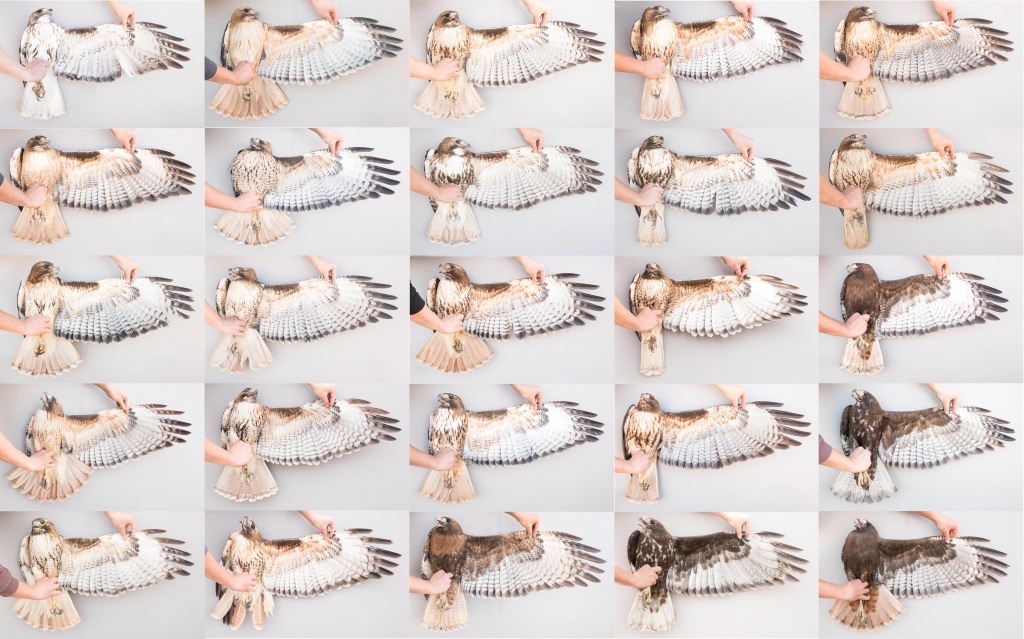
This season we have added 32 new transmitters to our tracking effort! This includes 25 from the desert southwest (see above), one dark morph in New York(!), and six birds in Washington (see below), all to represent our biggest seasonal transmitter effort yet! Our focus this season was primarily on bolstering our sampling of migratory individuals in the subspecies calurus. We focused our efforts on California, Arizona, and New Mexico, and came away with a nice variety of individuals that also included a few harlani. Many of these birds are already mid-way through their spring migration towards their breeding grounds.
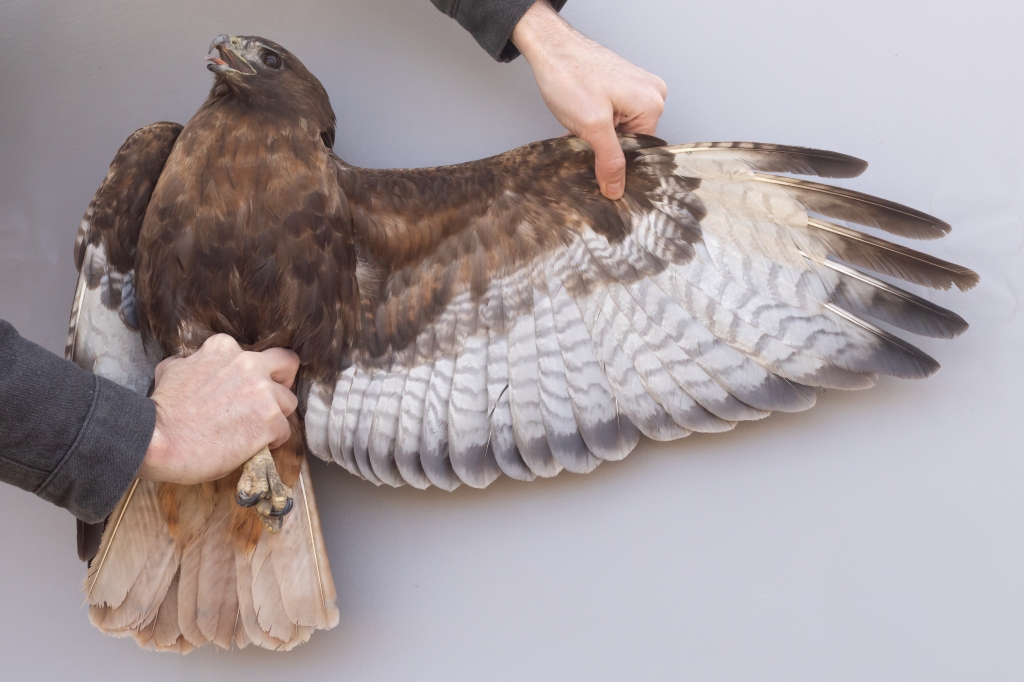
We also had the extreme fortune to capture another dark morph adult in the eastern part of the continent in New York. This individual now represents the farthest east capture of a dark morph Red-tailed Hawk. The hope is that it will move north and become the farthest east known breeding location for the plumage type ever recorded, furthering our understanding of the distribution of polymorphism in the species and strengthening our ability to assess what factors drive this pattern.
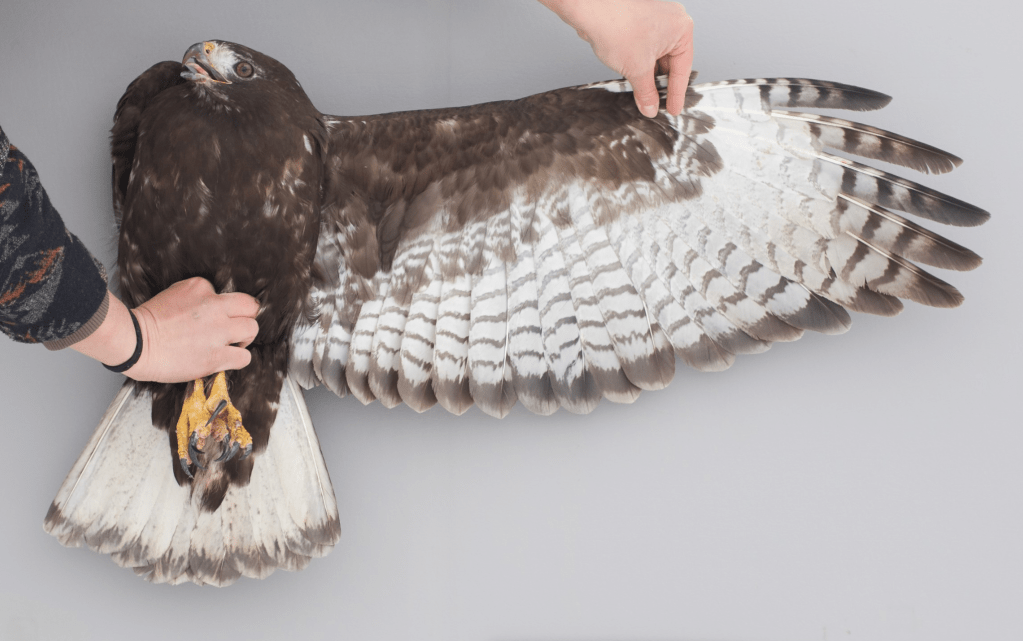
Finally, we have added another handful of birds to our sampling in the Pacific Northwest. This includes a few harlani and non-harlani, which we hope will strengthen a perspective on what plumage types breed where, and how they are related.
Stay tuned for updates on this group, and how they all contribute to our research!I
 Red-tailed Hawk Project